About
Care and conscience are
the core of our corporate values
more
the core of our corporate values

Peripheral artery aneurysm, as a serious but manageable vascular disease, is continuously seeing innovative treatment methods with the development of interventional medicine. Among them, the application of peripheral coils has gradually expanded from intracranial aneurysm treatment to a broader peripheral vascular field, marking a new stage in minimally invasive interventional treatment.
The technical foundation of peripheral coils can be traced back to the 1970s. Serbinnenko pioneered the use of detachable balloon technology to embolize intracranial aneurysms, initiating vascular endotherapy. By 1991, Guglielmi developed the electrolytically detachable platinum microcoil (GDC), which revolutionized aneurysm treatment. This device, consisting of a stainless-steel guidewire connected to a platinum coil, is delivered into the aneurysm via a microcatheter, where current induction promotes clot formation; the connection is electrolytically broken, and the coil is permanently left in place to occlude the aneurysm.
Compared to traditional craniotomy, coil interventional therapy is less invasive, with quicker recovery and higher safety, making it the preferred minimally invasive method for treating aneurysms, widely used in the clinical treatment of intracranial aneurysms.
In recent years, the use of coils has gradually expanded from neurointervention to the treatment of peripheral artery aneurysms. Peripheral artery aneurysms often occur in the iliac artery, femoral artery, subclavian artery, etc. Once ruptured, they can cause severe bleeding, even life-threatening. Embolization with peripheral coils can effectively block blood flow to the aneurysm, reducing the risk of rupture.
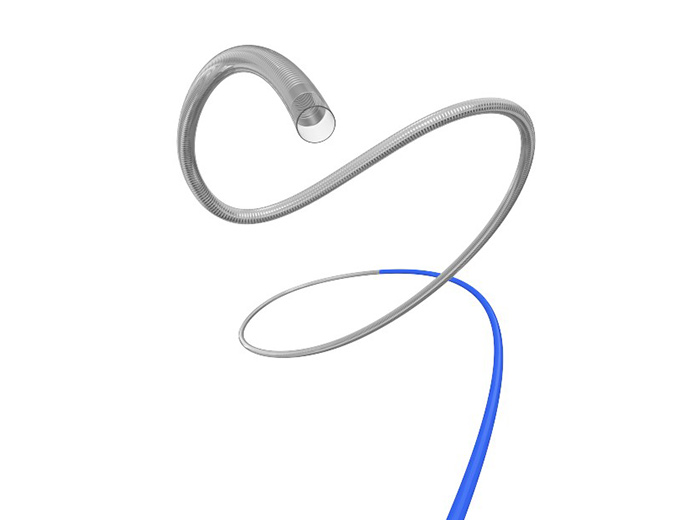
Peripheral coils are usually made of platinum or composite materials, providing good flexibility and malleability to conform to complex vascular paths. During surgery, doctors precisely deliver the coils into the aneurysm cavity through a microcatheter, utilizing the coil's structure to guide blood flow to form clots, thereby achieving aneurysm occlusion.
Its main mechanisms include:
Slowing blood flow to promote natural clot formation;
Mechanically filling and sealing the aneurysm cavity to prevent continued blood perfusion;
Minimally invasive operation significantly reduces surgical risk and recovery time.
Compared to traditional open surgery, peripheral coils offer a less invasive, quicker recovery, and more adaptable treatment option, particularly suitable for elderly patients or those with multiple comorbidities. With continuous advancements in imaging navigation, material engineering, and catheter systems, the scope and ease of use of peripheral coils are continuously improving. In the future, they are expected to form combination therapies with covered stents and flow diverter devices, further enhancing the treatment of complex peripheral vascular diseases. Peripheral coils represent not just an interventional tool but also a snapshot of the deepening development of minimally invasive medical technology.